
Practical article
Fewer digital time-wasters in construction projects
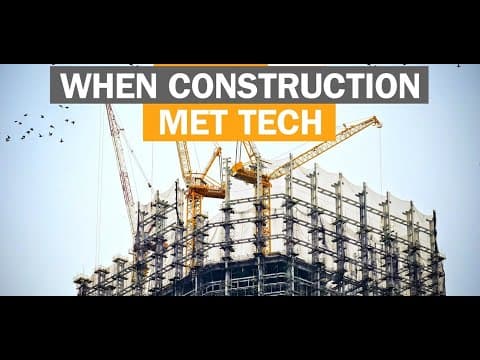
When the same information has to be entered in several places, every change creates another follow-up task. Experience from Consto and Christie & Opsahl shows why digitalisation should begin with the work people do and a specific description of where information gets stuck.
In When Construction Met Tech, the contractors meet IT specialists to discuss these problems. Christie & Opsahl's presentation is dated 26 March 2021, and the recording was published on 30 March. The meeting provides several examples of tasks that make useful starting points for improvement.
Follow one piece of information through the working day
Bjørnar Gundersen and Odd Inge Samuelsen from Consto describe project startup involving documents, organisation charts, contact lists and health and safety information that must be created and maintained in several tools. Workforce registration and timesheets add separate tasks.
Andreas Andenæs from Christie & Opsahl highlights invoice processing, approval of hours and training in new project collaboration platforms. Projects may also have different folder structures and BIM manuals that employees need to learn.
These examples offer a practical starting point: choose one piece of information, such as who is responsible for a task. Follow it from its first entry to every place it is used. This makes it easier to see which transfers are manual and who must notice that something has changed.
Distinguish the needs of different roles
A registration system must fit several working situations. Hourly paid employees need simple entry, site managers need information for follow-up and approval, and administration needs an overall picture.
The meeting makes these differences clear. A feature can exist in the software without the task being simple for everyone involved. The review should therefore cover entry, checking and subsequent use.
A useful question for each role is: what do you need to know to do the next part of the job, and where do you find it today? Answers can produce a more precise brief for the supplier than a general wish for “better integration”.
Give the technology supplier a focused problem
Nivero, Axbit, Autility and Serit contribute from the IT side. Discussion includes interfaces, data access and help with expressing needs. Serit shows an approach from strategic analysis and a review of systems to prioritised actions.
This fits the layers in the presentation on digital strategy for construction and property: organisational tasks, the information needed, technology and standards must be considered together. System choices become easier to assess when the task and information need are clear.
A focused improvement proposal can describe what information should move, where it should come from, who will use it and how errors should be handled. The organisation and supplier can then examine both existing possibilities and development needs.
Make the improvement possible to follow up
As an initial trial, we suggest choosing one recurring workflow and recording how it works before and after a change. Examine manual transfers, waiting, errors that need correction and whether the recipient receives the necessary information.
Also agree who owns the information and who follows up the workflow. A technical connection needs a working process for changes and exceptions.
The meeting ends with proposals for further contact and smaller working sessions. It does not document completed improvements or measured benefits at the companies. Its value to readers lies in the practical problems and the approach: involve the people doing the work, describe one task precisely and examine the improvement with the supplier.